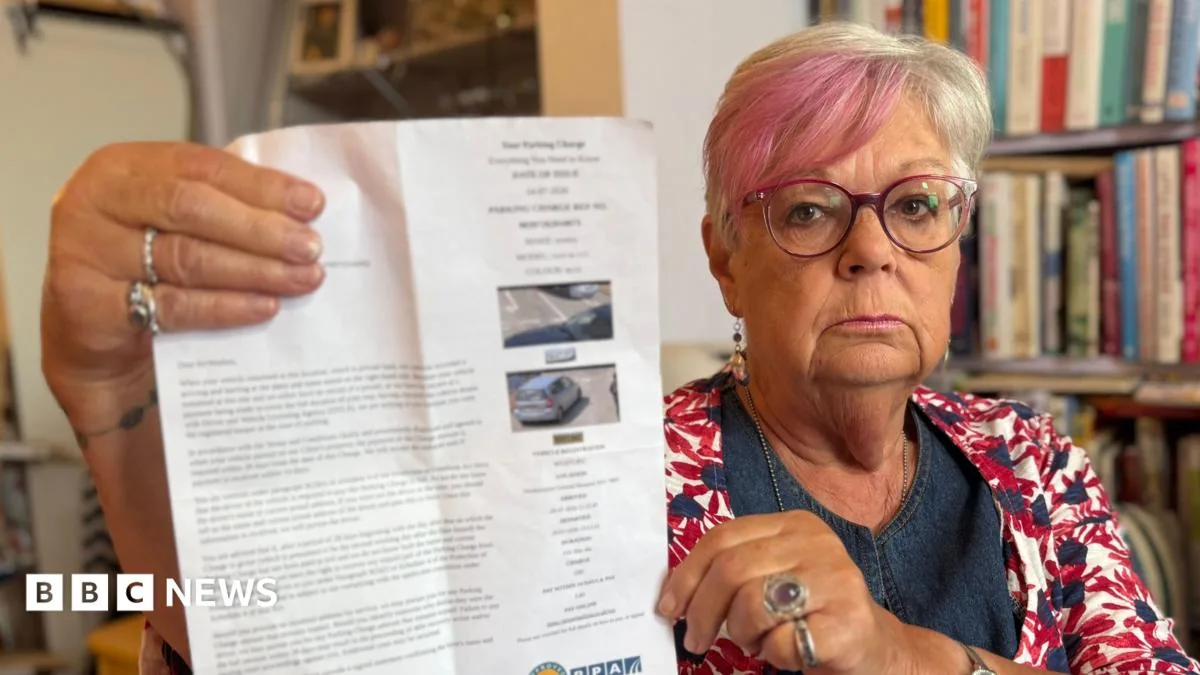
BURY ST EDMUNDS — Older motorists have said they feel deeply uneasy about cashless car parks, warning that parking apps can be confusing, unreliable and costly if anything goes wrong. Their concerns were raised after Roland Nice, 89, from Bury St Edmunds, was handed a £60 charge after becoming muddled over how to pay at a car park in Haverhill.
The issue affects more than one person. The RAC says private companies issued a record 16.9 million parking charges in 2025/26, although not all were linked to app use or older drivers. Some motorists say the shift away from pay-and-display machines is leaving them exposed to mistakes, missed payments and possible scams.
Several drivers told the BBC they now avoid app-only car parks altogether.
Drivers describe confusion, fear of scams and costly mistakes
Angela Carruthers, 79, from Kelvedon, said she recently entered a Colchester car park only to find the ticket machine had been replaced with an app. She said the app did not work for her and she now fears a £100 charge.
Paul Chamberlain, 69, from Ipswich, said he deliberately avoids parking sites that rely on mobile payments. He said QR codes worried him because of stories about fake codes being placed over genuine notices, which could trick drivers into paying the wrong account.
Sarah Martinelli, 72, from Letchworth, said she tried to use a town centre car park where both coin and card payment options were out of order. She said she could not make the app work in time and later received a £100 charge. She argued that parking firms should not leave people without a simple alternative.
The complaints are not limited to one region or one type of site. The drivers interviewed described a wider problem: when payment depends on a phone, a weak signal, unfamiliar software or a rushed decision can quickly turn into a charge.
Hospital and private parking disputes fuel calls for simpler systems
Liz Pritchard, 75, from Northampton, said she was left angry after being fined at Northampton General Hospital. She said she paid for an hour but spent about 40 minutes looking for a space, meaning the total time in the car park came to more than 90 minutes. The BBC understands that charge has since been cancelled as a gesture of goodwill.
Hugh Turner, 79, from Bures, on the Suffolk-Essex border, received a £100 charge after a space had been pre-booked with the wrong registration number. He appealed, but the company reduced the demand to £20. He said the original decision felt traumatic and unfair.
Charles Cook, 81, from Clapham in Bedfordshire, had a similar experience after booking a space in Milton Keynes but parking in the wrong one. He said he had paid to park and had made an honest mistake that could happen to any driver, whatever their age.
Several of those affected said they would prefer one consistent parking app across the country rather than having to download multiple different systems for different car parks.
Industry bodies say drivers should be able to appeal errors
Napier Parking Ltd said Roland Nice had a five-minute grace period to decide whether to park after entering the Swan Lane car park in Haverhill. Roland said he spent eight minutes trying to understand the digital options, wrongly believed cash was not accepted and then left to park elsewhere, before later receiving the £60 charge.
Rob Heard MBE, from the Old Drivers Forum, said nobody should be excluded from everyday life just because they do not carry a smartphone. He said the issue is not only about driving, but about accessibility and inclusion, and that essential services should not assume everyone can use apps with ease.
The British Parking Association said parking should be easy for everyone, regardless of age or digital confidence. It said digital innovation must be matched by digital inclusion and said the National Parking Platform is intended to let motorists use the app they already have rather than downloading a different one for each car park.
The International Parking Community said it takes concerns about fairness seriously and encourages motorists to appeal first to the operator and then to the independent adjudicator if they believe a charge was issued in error.
The latest UK news and stories from The Rotation.